top of page

Infectious Disease

Histoplasmosis, coccidioidomycosis, blastomycosis

Clinical Overview and When to Suspect Endemic Mycoses

Three dimorphic fungi cause most endemic mycoses in North America:

All exist as mold in soil (25°C) → convert to yeast at body temp (37°C) — except Coccidioides → spherules

Suspect endemic mycosis when:

Board pearl: Geography is the #1 clue — always note the patient's state of residence or travel history.

Histoplasma capsulatum — Ohio/Mississippi River valleys; bat/bird droppings
Coccidioides immitis/posadasii — Southwestern US (Arizona, Central California); desert soil
Blastomyces dermatitidis — Great Lakes, Ohio/Mississippi valleys; moist soil near waterways
Community-acquired pneumonia fails standard antibiotics
Travel/residence in endemic zone + pulmonary infiltrates
Immunocompromised host with disseminated disease
Solid White Background
Histoplasmosis — Presentation Patterns

— Often self-limited in immunocompetent hosts

— CXR: diffuse reticulonodular infiltrates, hilar/mediastinal lymphadenopathy

— Fever, weight loss, hepatosplenomegaly, pancytopenia

— Skin: papules, nodules, oral ulcers

— Adrenal involvement → adrenal insufficiency

Board pearl: Histo + pancytopenia + hepatosplenomegaly in AIDS → think disseminated histoplasmosis.

Acute pulmonary: fever, cough, malaise 2–4 wk after exposure (cave exploration, demolition of old buildings)
Chronic cavitary: mimics TB — upper lobe cavities in patients with underlying COPD
Disseminated: HIV (CD4 < 150), transplant recipients, anti-TNF therapy
Solid White Background
Coccidioidomycosis and Blastomycosis — Presentations

Coccidioidomycosis (Valley fever):

Blastomycosis:

Key distinction: Verrucous skin lesions → blasto; erythema nodosum → cocci; oral ulcers + pancytopenia → histo.

60% asymptomatic; 40% → flu-like illness + cough + chest pain
Erythema nodosum / erythema multiforme — "desert rheumatism"
Dissemination risk: Filipino, African American, pregnant (3rd trimester), immunosuppressed
Meningitis: basilar predominance; CSF eosinophilia is a classic clue
Pulmonary: cough, fever, infiltrates mimicking pneumonia or malignancy
Skin: verrucous (wart-like) or ulcerative lesions — most common extrapulmonary site
Bone: lytic lesions, osteomyelitis
Prostate/epididymis involvement in men
Solid White Background
Diagnostic Workup — Serologic and Antigen Testing

— Cross-reacts with Blastomyces

— CSF CF antibody confirms cocci meningitis

Next best step for suspected endemic mycosis:

Board pearl: Cocci CF titer ≥1:32 → high risk of dissemination.

Histoplasma urine/serum antigen (EIA): most useful in disseminated & acute severe disease; sensitivity ~95% in disseminated
Coccidioides serology: IgM (early) and IgG (complement fixation) — rising CF titer indicates dissemination
Blastomyces antigen (urine/serum): moderate sensitivity; no reliable serologic test
Mild/moderate → serology + antigen testing
Severe/disseminated → add cultures + histopathology
Solid White Background
Diagnostic Workup — Cultures, Histopathology, Imaging

Culture (gold standard for all three):

Histopathology:

Imaging:

Board pearl: Broad-based budding = Blasto; intracellular yeast = Histo; spherules with endospores = Cocci.

Grows on Sabouraud agar — handle with biosafety level 3 precautions (mold form is highly infectious)
Slow growth: 2–6 weeks
Histo: small (2–4 µm) intracellular yeast within macrophages
Cocci: large spherules (20–60 µm) filled with endospores
Blasto: broad-based budding yeast (8–15 µm), thick refractile cell wall
Histo: hilar lymphadenopathy, calcified granulomas, fibrosing mediastinitis (late)
Cocci: thin-walled cavities, peripheral nodules
Blasto: mass-like infiltrates → often mistaken for lung cancer
Solid White Background
First-Line Treatment — Mild to Moderate Disease

Mild/moderate pulmonary disease:

Key distinction: Blasto is the only one where mild disease always requires treatment — spontaneous resolution is unreliable.

Itraconazole dosing:

Board pearl: Itraconazole is the azole of choice for mild-moderate histo and blasto; fluconazole is preferred for cocci.

Histoplasmosis: most cases self-resolve; itraconazole if symptomatic > 4 wk
Coccidioidomycosis: observe if immunocompetent + mild; fluconazole or itraconazole if persistent or risk factors for dissemination
Blastomycosis: always treat (even mild) → itraconazole × 6–12 months
Loading 200 mg TID × 3 days → 200 mg BID maintenance
Check serum levels at 2 weeks (target ≥1 µg/mL)
Monitor LFTs
Solid White Background
Treatment — Severe and Disseminated Disease

Severe pulmonary or disseminated disease (all three fungi):

— Histo: itraconazole × ≥12 months

— Cocci: fluconazole (or itraconazole) × ≥12 months

— Blasto: itraconazole × ≥12 months

Coccidioidal meningitis:

Next best step: Severe disease with hypoxia or hemodynamic instability → start amphotericin B immediately, then de-escalate to azole once clinically stable.

Induction: IV amphotericin B (lipid formulation preferred → less nephrotoxicity) × 1–2 weeks
Step-down: oral azole for prolonged maintenance
Fluconazole (high-dose, 400–800 mg/day) — LIFELONG therapy
Intrathecal amphotericin B if refractory
Solid White Background
Treatment — AIDS-Related Disease and De-escalation

Histo in HIV/AIDS (CD4 < 150):

Cocci in HIV/AIDS:

De-escalation principles:

Board pearl: Cocci meningitis requires lifelong fluconazole — never discontinue even if HIV is well controlled.

Induction: liposomal amphotericin B × 1–2 wk
Maintenance: itraconazole until CD4 > 150 × ≥6 months on ART + negative antigen
Lifelong fluconazole if CD4 < 250 + positive serology or active disease
May discontinue if CD4 > 250 on ART + negative serology + no meningitis
Switch IV amphotericin → oral azole once clinically improved
Monitor antigen levels (histo) or CF titers (cocci) to assess response
↓ antigen or ↓ CF titer = treatment response
Solid White Background
Special Populations — Pregnancy

Coccidioidomycosis in pregnancy:

Histoplasmosis/blastomycosis in pregnancy:

Board pearl: Pregnant woman from Arizona with pneumonia + erythema nodosum → suspect cocci → treat with amphotericin B, NOT fluconazole.

Azoles (itraconazole, fluconazole, voriconazole) are teratogenic → contraindicated in pregnancy
Amphotericin B (deoxycholate or lipid) is the only safe antifungal in pregnancy
3rd trimester → ↑ risk of dissemination (estrogen-mediated)
Treat all active cocci in pregnancy with amphotericin B
Mild disease: may observe closely if stable
Moderate-severe: amphotericin B
Solid White Background
Special Populations — Pediatric and Immunosuppressed

Pediatric:

Immunosuppressed (transplant, anti-TNF):

Renal impairment:

Board pearl: Always check azole–immunosuppressant interactions in transplant patients.
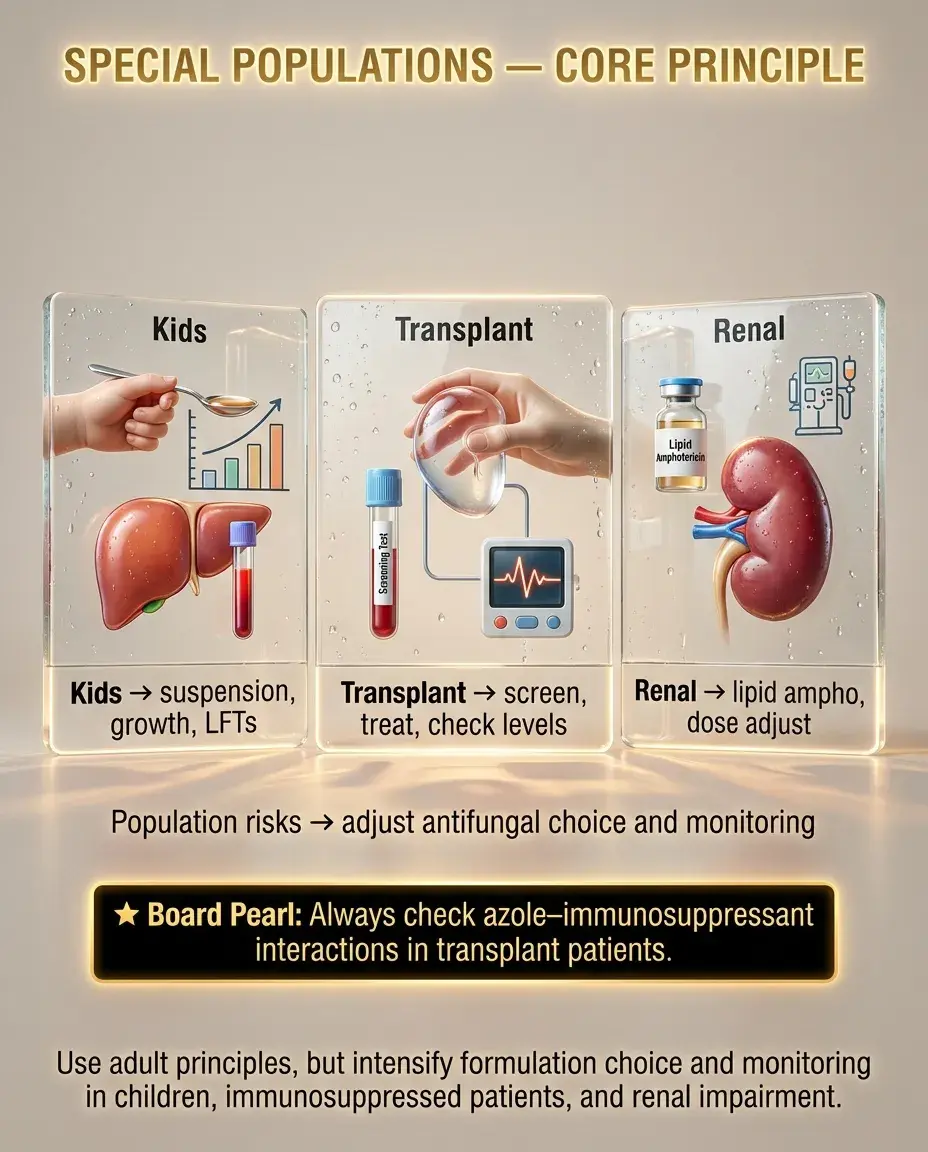
Same treatment principles as adults
Itraconazole suspension preferred (better absorption than capsules)
Monitor growth and hepatic function
Screen for cocci serology pre-transplant if from endemic area
Lower threshold to treat all three mycoses
Drug interactions: azoles ↑ calcineurin inhibitor levels (cyclosporine, tacrolimus) → monitor drug levels closely
Avoid amphotericin B deoxycholate → use lipid formulation
Azoles: generally safe but monitor
Fluconazole is renally cleared → dose adjust
Solid White Background
Complications and When to Escalate

Histoplasmosis complications:

Coccidioidomycosis complications:

Blastomycosis complications:

When to escalate:

Board pearl: Fibrosing mediastinitis is a late, irreversible complication of histo — NOT an indication for antifungals.

Fibrosing mediastinitis — excessive fibrotic response to granulomatous inflammation; compresses great vessels/airways; no proven treatment
Pericarditis — usually self-limited; NSAIDs ± steroids
Meningitis — hydrocephalus requiring VP shunt
Ruptured pulmonary cavity → pneumothorax/empyema
ARDS — blasto can cause fulminant pneumonia with >10% mortality
Osteomyelitis, CNS disease (rare but serious)
Failure to improve after 1 week of azole → switch to amphotericin B
New CNS symptoms → CSF analysis + imaging
Solid White Background
IRIS and Immune Reconstitution Considerations

Immune reconstitution inflammatory syndrome (IRIS):

Management of IRIS:

Next best step: Worsening symptoms after ART initiation with falling Histoplasma antigen → IRIS → supportive care ± corticosteroids.

Seen in HIV patients starting ART with concurrent endemic mycosis
Paradoxical worsening: fever, ↑ lymphadenopathy, worsening infiltrates despite negative/falling antigen
More common with histo and cocci
Continue ART + antifungal therapy
Corticosteroids for severe IRIS (prednisone taper)
Distinguish IRIS from treatment failure → check antigen/titers (should be ↓ in IRIS, ↑ in failure)
Solid White Background
Key Differentials — Pulmonary Presentations

Endemic mycosis vs TB:

Endemic mycosis vs sarcoidosis:

Blasto vs lung cancer:

Board pearl: Young patient from Ohio Valley with bilateral hilar LAD → rule out histo before diagnosing sarcoidosis.

Both cause upper lobe cavitary disease, granulomas
TB: night sweats, hemoptysis, AFB on sputum
Histo: hilar calcifications, endemic area, bird/bat exposure
Both: bilateral hilar lymphadenopathy, granulomas
Sarcoid: non-caseating granulomas, ↑ ACE, African American woman
Histo: caseating granulomas, positive antigen/cultures
Mass-like lesion on imaging → biopsy → broad-based budding yeast
Solid White Background
Key Differentials — Disseminated and Skin Findings

Disseminated histo vs disseminated MAC in AIDS:

Blasto skin vs squamous cell carcinoma:

Cocci meningitis vs TB meningitis vs cryptococcal:

Key distinction: CSF eosinophilia + basilar meningitis = cocci until proven otherwise.
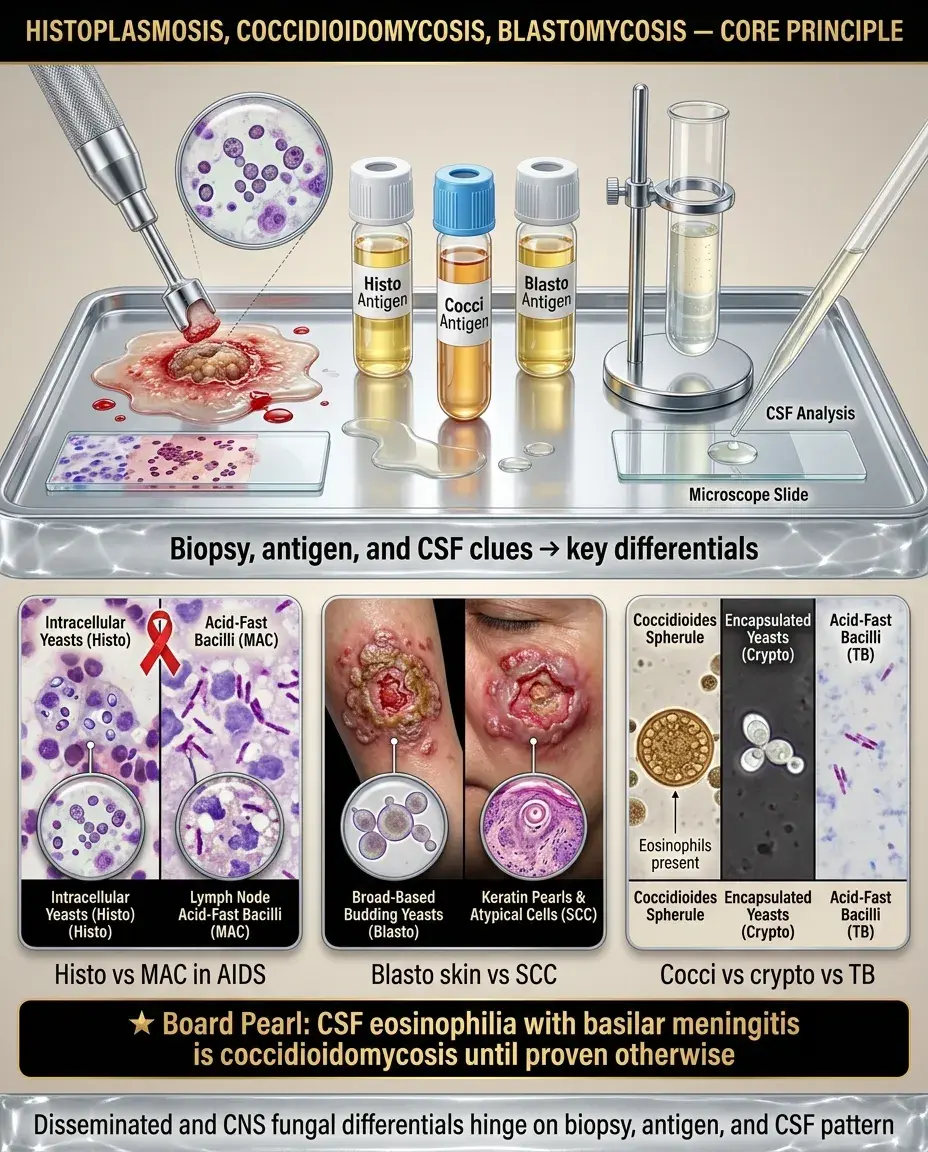
Both: fever, pancytopenia, hepatosplenomegaly, CD4 < 50–150
MAC: ↑ alk phos prominent; AFB blood cultures positive
Histo: urine antigen positive; intracellular yeast on biopsy
Verrucous lesions → biopsy to distinguish
All cause basilar meningitis
Cocci: CSF eosinophilia, + CF antibody, endemic area
Crypto: India ink, + cryptococcal antigen, CD4 < 100
TB: ↑ protein, ↓ glucose, lymphocytic, AFB
Solid White Background
Prophylaxis and Screening Indications

Primary prophylaxis:

Secondary prophylaxis (after treatment of active disease in HIV):

Pre-transplant screening:

Board pearl: Secondary prophylaxis is more commonly tested than primary prophylaxis for endemic mycoses.

Histoplasmosis: itraconazole if CD4 < 150 + living in hyperendemic area (not routinely recommended for most)
Coccidioidomycosis: no routine primary prophylaxis; screen serology pre-transplant in endemic areas
Blastomycosis: no primary prophylaxis
Histo: itraconazole until CD4 > 150 × ≥6 months + undetectable Ag
Cocci: fluconazole — lifelong if meningitis; otherwise until CD4 > 250
Cocci serology in endemic-area patients
If positive → prophylactic fluconazole post-transplant
Solid White Background
Follow-Up and Monitoring on Treatment

Itraconazole monitoring:

Response assessment:

Duration:

Next best step: Patient on itraconazole with rising Histoplasma antigen → assess adherence, check drug levels, consider switch to amphotericin B.

Serum drug level at 2 weeks (goal ≥1 µg/mL)
LFTs at baseline, 1 month, then periodically
Drug interactions: avoid PPIs/H2 blockers (↓ absorption of capsule form)
Histo: urine Histoplasma antigen q3–6 months → should ↓
Cocci: CF titers q3–6 months → should ↓
Blasto: clinical + radiographic improvement
Mild-moderate: 6–12 months azole
Disseminated/severe: ≥12 months
Cocci meningitis: lifelong
Solid White Background
Ethical, Legal, and Patient Safety Considerations

— Employers should provide respiratory protection in endemic zones

Patient counseling:

Board pearl: Always notify the lab when sending samples for suspected dimorphic fungi — accidental lab exposure is a real safety risk.
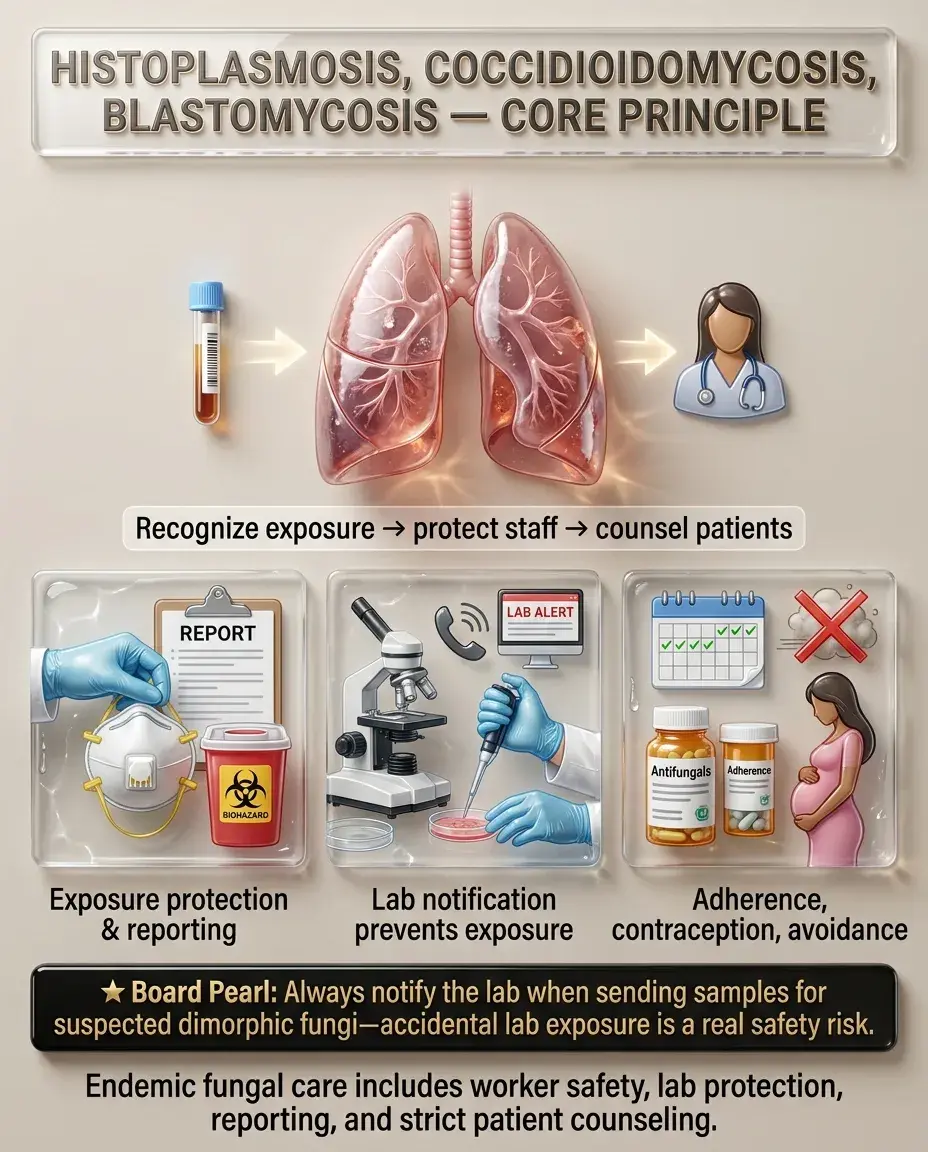
Occupational exposure: spelunkers (caves), construction/demolition workers (histo); archaeologists, farmworkers (cocci)
Laboratory safety: culture of dimorphic fungi is a biosafety level 3 hazard → notify lab if suspected
Reporting: coccidioidomycosis is reportable in endemic states (AZ, CA)
Lifelong therapy for cocci meningitis — emphasize adherence
Azole teratogenicity — contraception counseling for women of childbearing age
Avoid re-exposure: soil disturbance, caves, dusty construction sites
Solid White Background
High-Yield Associations and Rapid-Fire Facts
Cave exploration + pneumonia → Histoplasma
Earthquake/dust storm in Arizona → Coccidioides
Verrucous skin lesion + pneumonia in Great Lakes area → Blasto
Broad-based budding yeast → Blasto
Intracellular yeast in macrophages → Histo
Spherules with endospores → Cocci
Erythema nodosum + arthralgias + desert travel → Cocci ("desert rheumatism")
Pancytopenia + hepatosplenomegaly + AIDS → Histo
CSF eosinophilia + meningitis → Cocci
Fibrosing mediastinitis → Histo
Only endemic mycosis always treated when diagnosed → Blasto
Only safe antifungal in pregnancy → Amphotericin B
Lifelong treatment → Cocci meningitis
Solid White Background
Board Question Stem Patterns
28M, spelunker from Ohio, cough + bilateral hilar LAD + ↓ CD4 → Disseminated histo → urine antigen, start amphotericin B
35F, Arizona, pneumonia + erythema nodosum → Cocci → serology (IgM, CF titer)
45M, Wisconsin, pneumonia + verrucous skin lesion → Blasto → biopsy shows broad-based budding yeast → itraconazole
AIDS patient, CD4 80, fever + pancytopenia + hepatosplenomegaly → Disseminated histo → urine Ag + liposomal amphotericin B
Cocci patient with headache, basilar meningitis, CSF eosinophils → Cocci meningitis → high-dose fluconazole lifelong
Pregnant woman, Tucson, pneumonia → Cocci → amphotericin B (azoles contraindicated)
Post-ART worsening with falling Histo antigen → IRIS → continue ART + antifungals ± steroids
Solid White Background
One-Line Recap
Histoplasmosis (Ohio/Mississippi valleys, bat/bird droppings), coccidioidomycosis (Southwest desert, dust), and blastomycosis (Great Lakes/river valleys, moist soil) are dimorphic fungi diagnosed by antigen testing, serology, and tissue showing intracellular yeast (histo), spherules with endospores (cocci), or broad-based budding yeast (blasto); mild-moderate disease is treated with itraconazole (histo/blasto) or fluconazole (cocci) while severe/disseminated disease requires amphotericin B induction followed by prolonged azole maintenance, cocci meningitis mandates lifelong fluconazole, blasto always requires treatment regardless of severity, and amphotericin B is the only option in pregnancy.
Solid White Background
Previous Item
Next Item
bottom of page